

IIT Bhubaneswar Unveils AI-Driven Hybrid Tech for Precise Weather Forecasting
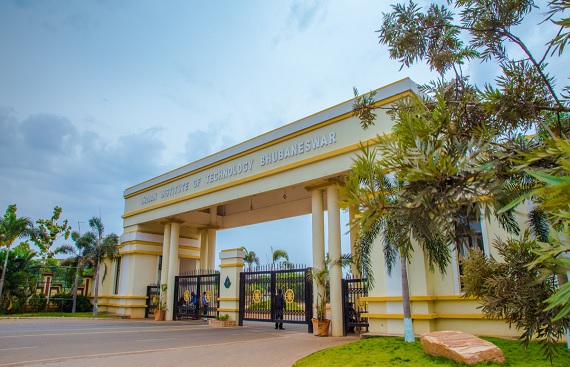
The Indian Institute of Technology (IIT) Bhubaneswar has developed a hybrid technology that integrates the output from the Weather Research and Forecasting (WRF) model into a deep learning (DL) model to enhance prediction accuracy, particularly focusing on improving the prediction of heavy rainfall events with sufficient lead time, according to official sources. The study also underscores the potential of artificial intelligence in advancing real-time weather forecasting, especially for heavy rainfall events in the complex terrains of the Indian region.
The studies were carried out over the complex terrain of Assam (highly vulnerable to severe flooding) during June 2023 and over the state of Odisha where heavy rainfall events are highly dynamic in nature due to the landfall of multiple intense rain bearing monsoon low-pressure systems.
“In Assam, the hybrid model displays prediction accuracy that is nearly double that of traditional ensemble models at a district level with a lead time up to 96 hours, showcasing its remarkable performance. These innovative studies have been carried out using retrospective cases”, official sources added.
Researchers from IIT Bhubaneswar, in another groundbreaking study, have made significant strides in accurately predicting heavy rainfall events in real-time using deep learning techniques. The study showcased the robustness of the new hybrid technology for real-time applications in the complex terrain of Assam.
“The study titled ‘Minimization of Forecast Error Using Deep Learning for Real-Time Heavy Rainfall Events Over Assam’, published in IEEE Xplore, has revealed that integrating DL with the traditional WRF model dramatically improves forecast accuracy for heavy rainfall events in real-time, a critical advancement for this flood-prone mountainous region like Assam”, added sources.
Between June 13 and 17, 2023, Assam faced severe flooding caused by heavy rainfall. The DL model successfully provided a more accurate prediction of the spatial distribution and intensity of rainfall at the district level. The research utilized the WRF model to generate initial real-time weather forecasts, which were then refined using the DL model.
With this new method, experts can now conduct a more detailed analysis of rainfall patterns by incorporating a spatio-attention module to better capture the complex spatial dependencies in the data. The model was trained using data from previous heavy rainfall events, including multiple ensemble outputs and observations from the India Meteorological Department (IMD), to enhance its accuracy.
“This advancement is crucial for mitigating the impacts of natural disasters and public safety. Additionally, these pioneering works will also serve as a guiding light in creating analogous hybrid models for other intricate topographical terrain areas such as the Western Himalayas and Western Ghats regions of India”, official sources said.


