

How Is New Medical Equipment Brought Into the Market - Talking With Compliance Expert Sasidhar Duggineni
The medical device industry, encompassing an array of products from surgical tools to advanced imaging devices, is a cornerstone of the healthcare sector's technological advancement. In addition to prescription drugs, medical devices are also regulated by the Food and Drug Administration (FDA). Ensuring their safety and efficacy requires adherence to rigorous testing, evaluation, and regulatory compliance procedures.
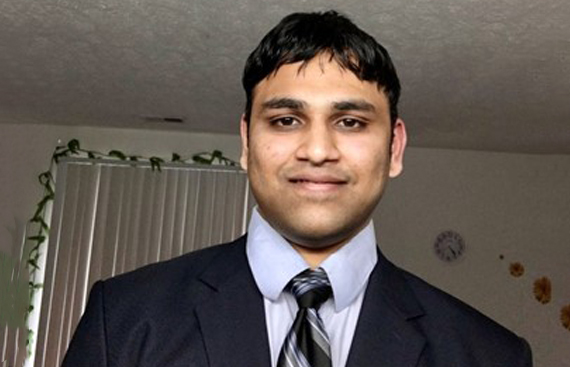
The role of Healthcare compliance experts in facilitating the rightful production and distribution of drugs and other categories of medical aid is expanding and maturing with time. Sasidhar Duggineni is a leading expert and researcher in the global space of medical device validation, whose data integrity as a code (DIAC) framework has enabled more improved reliable data collection methods for design validation of medical devices.
Sasidhar is a celebrated author and researcher in the domain of regulatory compliance, with eminent focus in the healthcare industry. He is a senior member with the IEEE (Institute of Electrical and Electronics Engineers) and has been published in several international publications of great significance in the field. One of his latest works titled ‘An Evolutionary Strategy for Leveraging Data Risk-Based Software Development for Data Integrity’ was recently published in the ISACA (Information Systems Audit and Control Association) journal.
Mr. Duggineni, in conversation with us, said that the goal of the medical device approval process is to release a device that is safe, effective, and meets the needs of patients and healthcare professionals. “Compliance with regulatory requirements is critical in the development of medical devices”, said Duggineni.
Compliance with regulatory requirements is critical in the development of medical devices. Medical device manufacturers employ regulatory affairs professionals along with product engineers to ensure that their devices meet all applicable regulatory requirements and guidelines.
Duggineni says that testing for durability, accuracy, and reliability, as well as conducting clinical trials, is required to demonstrate a medical device’s efficacy in treating the intended condition.
To get FDA’s approval for medical devices, there is a five-fold procedure — classify the device, develop a prototype, submit an application to the regulatory body, wait for FDA review and approval, and maintain FDA compliance.
Mr. Duggineni shared that knowing your medical device class before the development is crucial as each specific class will dictate how manufacturers need to manage the relevant requirements and testing. This will be the first step of the approval process.
In the second step of prototyping, testing of prototypes in laboratory environments is carried out with the goal of reducing risk to a maximum level before human use. Depending on the results of prototyping, a clinical trial may follow.
The third step of FDA clearance entails submission of pre-market notification or application. This application or notification involves FDA verification and validation of your device. Duggineni’ s framework of DIAC has proven to be a successful and remarkably valuable tool for verification and validation of medical devices.
The penultimate step of waiting for FDA’s verdict determines the prospects of new medical devices in the marketplace. Once an approval is notified, the buck doesn’t stop there, it is the responsibility and a regulatory requirement for medical device manufacturers to keep the medical device in compliance for the entirety of its life span.
“Success is watching dreams turn into reality,” Duggineni says. He shared - “It’s not about the bottom line. It’s about making a difference in the world and applying research and technology to the all-encompassing goal of saving lives.”
The journey of an exemplary healthcare compliance expert like Sasidhar Duggineni is an example of the life-saving contributions of compliance leaders in the healthcare industry. With his passion for research and technology, Sasidhar continues to pursue novel innovations to unlock the next stages of patient-care.


