

Global Trade Driving Growth in the STS Container Crane Market: Trends and Opportunities
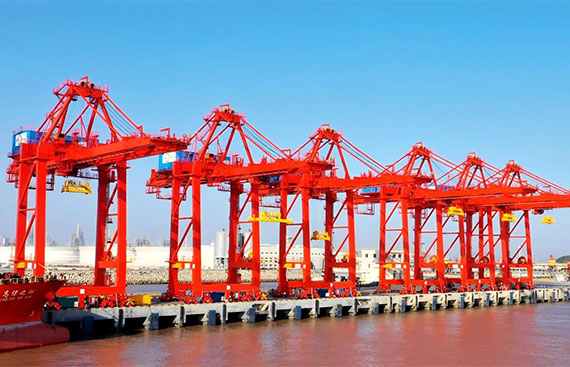
With the continuous growth of international trade and deepening globalization, ship-to-shore (STS) container cranes have become indispensable in enhancing cargo handling efficiency, optimizing supply chain management, and supporting modern port operations. These cranes are experiencing unprecedented market demand, underscoring their critical role in the global logistics landscape.
Market Expansion Driven by Global Trade
In 2023, the global STS container crane market was valued at $2.67 billion, and it is expected to grow to $3.99 billion by 2032, with a compound annual growth rate (CAGR) of 4.6%. This growth is primarily fueled by the rising volume of international trade, especially with the increasing adoption of ultra-large container vessels (ULCVs), which necessitate more efficient port crane equipment.
Key ports in Asia, Europe, and North America are heavily investing in modern port facilities to meet the growing complexities of trade. For example, major ports in China, such as Ningbo-Zhoushan and Shanghai, play a pivotal role in global trade networks, driving sustained demand for high-performance STS cranes. These equipment upgrades enhance port throughput and strengthen their international competitiveness.
Trend 1: Larger Cranes and Technological Advancements
To accommodate the ever-growing size of container vessels, ports are adopting larger and more efficient STS cranes. Compared to traditional models, the next-generation ultra-large STS cranes offer greater handling capacities and extended outreach. For instance, in 2023, PSA Halifax acquired giant STS cranes to handle ULCVs, significantly boosting port efficiency.
Simultaneously, the industry is witnessing a shift towards electrification and automation. Electric STS cranes, favored for their environmental benefits and low operating costs, have become the preferred choice for many ports. Additionally, automation technologies, such as remote control and real-time data analytics, are enhancing operational efficiency and safety.
Trend 2: Regional Market Diversification
The global STS crane market exhibits distinct regional characteristics:
- Asia-Pacific: As the core region of global trade, Asia-Pacific leads in STS crane demand. Ports in China, Japan, and South Korea are continuously upgrading equipment to maintain their competitiveness in international logistics.
- Europe: European ports prioritize eco-friendly solutions, such as hybrid and electric STS cranes, to comply with stringent environmental regulations.
- North America: The expansion of ports along the East Coast and the Gulf of Mexico drives sustained demand for STS cranes in this region.
Opportunities: Globalization and Emerging Markets
The growth of international trade offers vast market potential for STS crane manufacturers. In emerging economies, port expansion and modernization projects are fueling the demand for advanced equipment. For instance, the rapid industrialization in Southeast Asia and Africa has made STS cranes essential infrastructure. Additionally, the rise of e-commerce has further expanded global supply chain demands, requiring ports to adopt more efficient container handling equipment to support increasing trade volumes.
Challenges and Strategic Responses
Despite the promising market outlook, high initial investment costs remain a significant barrier to further market expansion. From crane procurement to infrastructure upgrades, port operators need substantial financial resources. However, the adoption of automation and smart technologies is gradually offsetting these costs by improving long-term operational efficiency and reducing maintenance expenses.
Conclusion: Trends and Opportunities Ahead
The steady growth of global trade continues to drive the expansion of the STS container crane market. From the trend of larger crane models to the diversified regional demands and the vast opportunities in emerging markets, the STS crane industry stands at a critical juncture of growth. As ports increasingly adopt integrated systems of STS container gantry crane, RTG container gantry crane, RMG container gantry crane, and mobile harbor cranes, the container-handling sector is poised to achieve unprecedented efficiency and adaptability.
With advancing technology and increasing market demand, this sector is poised to play an even more significant role in international trade and port operations in the years to come.


