

First successful deboosting of the Vikram lander on Chandrayaan-3
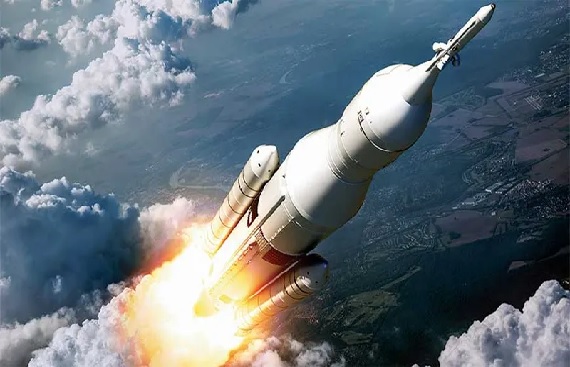
Indian Space Research Organisation (ISRO) reported that the Vikram lander on the Indian Chandrayaan-3 spacecraft successfully completed its first deboosting mission. The lander module's condition was reportedly normal, according to the authorities. "LM successfully underwent a deboosting operation that reduced its orbit to 113 km x 157 km," stated ISRO in a tweet on X (previously Twitter). Deboosting is the process of slowing down to get oneself in an orbit where the Perilune, the point closest to the Moon, is 30 km away and the Apolune, the farthest point, is 100 km away. The second deboosting procedure is planned for August 20, 2023, at roughly two in the morning.
The lander was successfully separated from the propulsion module or the mother aircraft on August 17, 2023. The lander has been named after Vikram Sarabhai (1919-1971), who is widely regarded as the father of the Indian space program. The spacecraft carried out the final lunar-bound orbit reduction manoeuvre of the Chandrayaan-3 spacecraft, a week ahead of its scheduled landing on the south pole of the moon on August 23. A GSLV Mark 3 (LVM 3) heavy-lift launch vehicle was used to launch the spacecraft that was placed in the lunar orbit on August 5 and since then, it has been through a series of orbital manoeuvres.
It has been a month and three days since the Indian Space Research Organisation launched the Chandrayaan-3 mission on July 14. The spacecraft was launched from the Satish Dhawan Space Centre in Andhra Pradesh's Sriharikota. ISRO is bidding to make a successful soft landing on the moon, which will make India the fourth country in the world to achieve the feat after the United States, Russia, and China. The stated objectives of Chandrayaan-3, India's third lunar mission, are safe and soft landing, rover roving on the moon's surface, and in-situ scientific experiments. The approved cost of Chandrayaan-3 is Rs 250 crores (excluding launch vehicle cost).
Chandrayaan-3's development phase commenced in January 2020, with the launch planned sometime in 2021. However, the COVID-19 pandemic brought an unforeseen delay to the mission's progress. Chandrayaan-3 is the ISRO's follow-up attempt after the Chandrayaan-2 mission faced challenges during its soft landing on the lunar surface in 2019 and was eventually deemed to have failed its core mission objectives. The key scientific outcomes from Chandrayaan-2 include the first-ever global map for lunar sodium, enhancing knowledge on crater size distribution, unambiguous detection of lunar surface water ice with IIRS instrument and more.
During the Chandrayaan-1 mission, the satellite made more than 3,400 orbits around the moon and the mission was concluded when the communication with the spacecraft was lost on August 29, 2009, according to the Indian Space Research Organisation (ISRO). Meanwhile, the Chairman of the Indian Space Research Organisation (ISRO), S Somanath last week expressed confidence in the progress of the Chandrayaan 3, providing reassurance that all systems were operating as planned. Chairman S Somanath stated, "Everything is going fine now. There will be a series of manoeuvres until it lands (on the Moon) on 23rd August. The satellite is healthy."
Moon serves as a repository of the Earth's past and a successful lunar mission by India will help enhance life on Earth while also enabling it to explore the rest of the solar system and beyond. Historically, spacecraft missions to the Moon have primarily targeted the equatorial region due to its favorable terrain and operating conditions. However, the lunar south pole presents a vastly different and more challenging terrain compared to the equatorial region.


