EU and India's Strategic Partnership Progresses
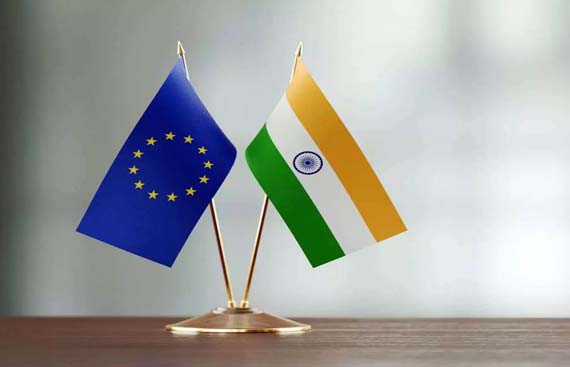
The EU-India Trade and Technology Council is India's first initiative with any partner. It complements the EU’s digital partnerships with other Asian nations and aligns with the EU Strategy for Cooperation in the Indo-Pacific.
In New Delhi, the European Union and India convened the second ministerial meeting of the Trade and Technology Council (TTC) on February 28, 2025. This meeting was part of one of the first official visits by the College of Commissioners during the new mandate. The TTC is a key forum for strengthening the strategic partnership between the two entities, particularly in trade and technology. Against evolving geostrategic challenges, the EU and India share a common interest in promoting security, prosperity, and sustainable development based on shared values. The TTC plays a crucial role in fostering bilateral trade, which reached historical highs in 2023, with €124 billion in goods traded. Additionally, services trade amounted to €60 billion, including €20 billion in digital services.
The ministerial meeting was co-chaired by the Executive Vice-President for Tech Sovereignty, Security, and Democracy, Henna Virkkunen, along with the Commissioner for Trade and Economic Security, Maroš ŠefÄoviÄ, and Commissioner for Startups, Research, and Innovation, Ekaterina Zaharieva, representing the EU. On the Indian side, the meeting was led by External Affairs Minister Dr. S. Jaishankar, Minister of Commerce and Industry Shri Piyush Goyal, and Minister for Railways, Information & Broadcasting, and Electronics & Information Technology Ashwini Vaishnaw.
Strategic Technologies, Digital Governance, and Connectivity
Both sides reaffirmed their commitment to deepening digital cooperation during the meeting, underscoring the importance of a human-centric digital transformation. They pledged to accelerate advancements in artificial intelligence (AI), semiconductors, high-performance computing (HPC), and 6G technology to benefit economies and societies.
The EU and India agreed to work towards ensuring interoperability between their respective Digital Public Infrastructures (DPIs) and safeguarding human rights, personal data, privacy, and intellectual property rights. Additionally, they emphasised the need for mutual recognition of e-signatures to facilitate cross-border digital transactions and support economic growth.
Both parties committed to exploring joint research and development in chip design in the semiconductor sector, further reinforcing the resilience of semiconductor supply chains. They also agreed to deepen collaboration between the European AI Office and India AI Mission, particularly in large language models (LLMs) and ethical AI development. Furthermore, a memorandum of understanding was signed between the EU 6G Smart Networks and Services Industry Association and the Indian Bharat 6G Alliance, marking a step toward secure telecommunications and resilient supply chains.
The meeting also confirmed financial support from both sides for the GANANA project, which aims to establish a long-term partnership in developing and applying HPC solutions. The project receives EU funding through EuroHPC JU, with a total budget of nearly €5 million under Horizon Europe. In addition to advancing HPC collaboration, the initiative will contribute to building AI application capacities.
Green and Clean Energy Technologies
Both parties acknowledged the progress made in green and clean energy technologies, which aligns with their shared ambition of achieving net-zero emissions by 2050 for the EU and 2070 for India. Their cooperation has extended to battery recycling for electric vehicles, successfully linking Indian and EU startups with potential partners and investors. An earlier workshop on electric vehicle charging standards was also conducted.
Looking ahead, the EU and India will initiate joint research cooperation under the Horizon Europe program. In 2025, exceptional, coordinated calls will focus on marine plastic litter and waste-to-renewable hydrogen. Additional calls on battery recycling for electric vehicles are planned for 2026, and potential future cooperation on wastewater treatment technologies is also planned. Together, these initiatives represent a joint investment of approximately €60 million.
Additionally, an "Ideathon" on marine plastic pollution will be launched, where Indian and EU partners will collaborate to develop practical solutions to address this environmental challenge. The two sides will also initiate a dialogue on harmonising electric vehicle charging infrastructure standards, which will facilitate mutual market access.
Trade, Investment, and Resilient Value Chains
India remains a vital trade and investment partner for the EU, with bilateral trade in goods and services reaching €184 billion in 2023. Given the rapid growth of India's market, there is substantial potential for further expansion of EU-India trade relations. The two parties are currently negotiating a free trade agreement, an investment protection agreement, and a geographical indications agreement. Given the current geopolitical and economic climate, finalising these agreements is a priority for both sides.
Strengthening trade relations is crucial for securing and diversifying supply chains for key inputs and final products, thus enhancing economic security. At the ministerial meeting, the EU and India committed to fostering resilient and future-ready value chains by collaborating on contingency planning for food security, ensuring sustainability in food systems, and establishing early warning systems to anticipate and mitigate supply chain disruptions for active pharmaceutical ingredients. They also explored synergies in clean energy value chains, particularly in solar energy, offshore wind, and green hydrogen technologies.
Progress was made on several market access issues, with both sides agreeing to continue discussions to address these challenges. Best practices on Foreign Direct Investment (FDI) screening were exchanged, reflecting the importance of collaboration in strengthening economic security. Additionally, both parties reaffirmed their commitment to the multilateral trading system while recognising the need to reform the World Trade Organization (WTO). The meeting also included in-depth discussions on trade and decarbonisation, particularly regarding implementing the EU’s Carbon Border Adjustment Mechanism (CBAM).