

Charming Keepsakes: The Allure of Wedding Invitation Cards
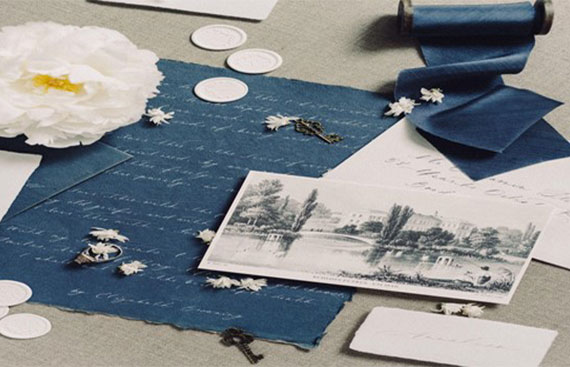
Marriage and more particularly weddings are popular topics all over the world, but did you know it is also the most significant occasion when it comes to remembering love and union?. And at the center of this revered custom is a seemingly straightforward yet profoundly significant component: the wedding invitation cards. A window into the development of love, rituals, and communication, these little, beautiful pieces of paper have a long and interesting history that spans cultures and centuries.
Wedding cards have their origins in prehistoric societies. Papyrus scrolls, for instance, were used in ancient Egypt to send invitations to important events like marriages. Today's exquisitely produced wedding cards originated from these scrolls. Hieroglyphs and elaborate motifs decorated them.
As time went on, several communities and cultures came up with their own distinctive methods for creating wedding invitations. For instance, in medieval Europe, marriages were advertised by town criers, but the nobility would frequently send out handwritten invitations on vellum, a lavish material resembling parchment. These early invitations frequently featured exquisite handwriting and detailed pictures, highlighting the time's artistic abilities.
The history of wedding cards underwent a paradigm shift in the 17th and 18th centuries. Mass manufacture of invitations became feasible with the invention of the printing press, enabling more people to celebrate the union of the couple. Engraved wedding invitations grew in popularity during this time, and elaborate designs with floral, Cupid, and other romantic motifs started to become the norm among the wealthy.
The design of wedding cards saw considerable alterations in the 19th century. An increased variety of styles and materials were available to the general population as new printing techniques were developed. The middle class also grew during this time period, which increased the demand for wedding cards. As a result, printing costs decreased and a wider range of people could now afford to have lovely wedding invitations.
Moderner and more varied designs began to appear in the early 20th century. Wedding cards' aesthetics were influenced by the Art Nouveau and Art Deco movements, which resulted in their elaborate patterns, geometric shapes, and vivid colors. Personalization emerged as a significant trend during this period, with couples including their own distinctive tastes and preferences in their wedding invites.
The advent of the digital age brought about yet another change in wedding cards. Couples now have a convenient and affordable alternative for creating and personalizing wedding invitations thanks to online platforms. As couples started to place a higher priority on sustainability in their wedding preparations, this digital revolution also gave rise to eco-friendly solutions.
Wedding cards have evolved in recent years into a platform for artistic expression. These days, couples are experimenting with a wide range of aesthetics, from beautiful and minimalist to wacky and offbeat. Some couples use video invitations, while others personalize their cards with details from their love story, like the location of their first date or a shared hobby.
Finally, the evolution of wedding cards from straightforward announcements to exquisite pieces of art that capture the personalities and preferences of the couple is evident as we look back on the history of wedding cards. Wedding cards have endured the test of time as a representation of dedication, love, and the joy of joining together to commemorate one of life's most romantic occasions, from ancient Egyptian scrolls to contemporary digital designs.


