

BYD Focuses on EV Launches in Rs 25-45 Lakh Range
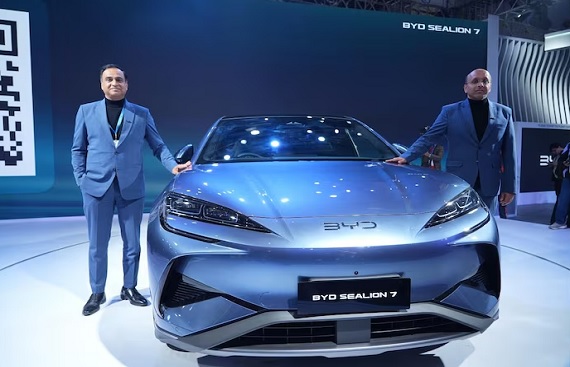
The electric vehicle (EV) major BYD is focusing more on the launches of electric vehicles in the price range of Rs 25-45 lakh, even as it continues to size up demand at more affordable prices. Rajeev Chauhan, head of electric passenger vehicles in India, said the company is keeping its focus in this price band as it measures customer preferences. This is also as BYD looks to widen its footprint in the Indian EV market.
Chauhan had, in September 2024, stated that the company was exploring launching new SUVs in two price bands- Rs 20-25 lakh and Rs 40-45 lakh - a decision for which is likely to be taken before the year-end. At Bharat Mobility Global Expo, BYD showcased its luxury electric SUV, Sealion 7, priced between Rs 40-45 lakh. Deliveries of Sealion 7 will start from March 7, 2025.
"We are currently focused on the Rs 25-45 lakh segment, and we are giving more emphasis to this range. Hence, we launched the electric premium SUV Sealion 7 at this expo. Though we have products for the sub-Rs 25 lakh range, we would wait a little more to enter that market", said Chauhan. He also stated that Mahindra & Mahindra and Hyundai had launched their electric vehicles in the sub-Rs 25 lakh space recently, so it was competition galore.
On being asked if being a Chinese company has been a deterrent for BYD to invest in India, Chauhan said, "Such is the hue and cry in the media, but what is important is a 'win-win' situation for everybody". He said BYD is open to investments but is taking a cautious, step-by-step approach. "We want customers to first experience our technology, and we are still in the process of building trust and confidence", he added. Chauhan further clarified that the company is not in talks with any potential Indian partners for a joint venture at this stage.
In terms of sales, BYD India witnessed a good growth in 2024. It sold 3,500 vehicles compared to 2,500 units in 2023. Chauhan is positive about the future. "In 2025, we are expecting double-digit growth for sure", he said.
At present, BYD imports all its vehicles from China to India. However, government regulations stipulate that a company is allowed to import no more than 2,500 units of a single model annually. This cap can be lifted if the vehicle obtains a homologation certificate from the Automotive Research Association of India (ARAI), which ensures that the vehicle meets Indian safety and regulatory standards. Chauhan confirmed that BYD can sell unlimited units of its Atto 3 model, as it has already received the homologation certificate. Acquiring homologation for the eMax7 model is under way, and the company also decides if it should apply for a certificate for the Sealion 7.
At the expo, BYD also debuted the Sealion 6-a plug-in hybrid vehicle. "We are judging customer interest for a plug-in hybrid like Sealion 6, and it is in evaluation at present", Chauhan said. A few luxury carmakers have already ventured into this segment, and few manufacturers have taken the same road in India.
According to data from the Federation of Automobile Dealers Associations (Fada), around 99,165 electric cars were sold in India in 2024, a 20% year-on-year growth. Tata Motors continues to lead the EV market in India with a 62% market share.
With a growing presence in India, BYD is positioning itself as a key player in the EV market, focusing on premium offerings while exploring opportunities in the affordable EV segment.


