

BH Series Number Plate: Format and Key Differences from Traditional Plates
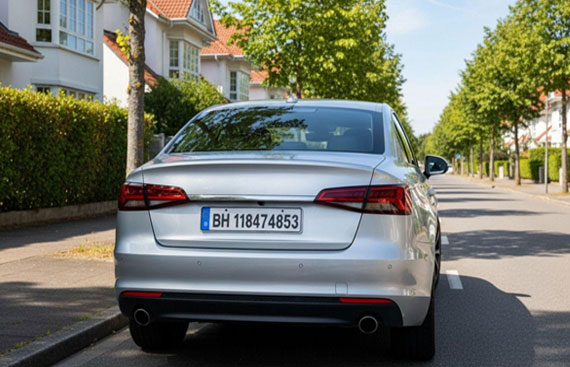
The introduction of the BH number plate marks one of the most significant reforms in India’s vehicle registration system. Designed to simplify interstate travel and reduce the administrative burden of re-registration, the BH Series, short for Bharat Series, makes vehicle portability far easier for eligible individuals and businesses.
Understanding how the BH number plate works, its structure, tax benefits, and how it differs from traditional registration numbers can help new vehicle owners make informed decisions.
Introduction to the BH Series Number Plate
The BH Series number plate is a uniform, pan-India vehicle registration format introduced to make cross-state travel and ownership simpler. It features a standardised alphanumeric pattern that remains valid across all states, along with a distinctive tax structure that replaces the traditional one-time state road tax with a simplified, two-year tax cycle.
Purpose Behind Introducing the BH Series
The Government of India introduced the BH Series to address a long-standing challenge faced by individuals who frequently relocate due to transferable jobs. Under traditional state-wise registration systems, moving to another state required:
- Applying for a no-objection certificate (NOC)
- Re-registering the vehicle in the new state
- Paying road tax again and seeking reimbursement from the previous state
This process was time-consuming and often inconvenient.
The BH number plate eliminates this complexity by offering pan-India registration, allowing vehicle owners to drive across the country without re-registration hassles.
The system promotes ease of mobility and aligns with modern workforce patterns, especially for government employees, PSU workers, and private-sector professionals with transferable roles.
Structure and Format of the BH Series Number Plate
The BH number plate follows a unique, standardised format across all states:
Format Example:
XX BH #### XX
Here is what each component represents:
- XX – The last two digits of the registration year (e.g., 21, 22, 23).
- BH – Stands for Bharat Series, replacing state codes like MH, DL, KA, etc.
- #### – A randomly generated four-digit number.
- XX – Two random alphabets except I and O (to avoid confusion with numbers).
This format is intentionally simple, uniform, and free of state identifiers. Unlike traditional plates that begin with a state and district code (such as MH-12 or KA-03), BH number plates carry a national identity, allowing unrestricted movement across India.
Eligibility Criteria for Getting a BH Series Registration
Not everyone can register their vehicle under the BH Series. Eligibility is limited to individuals whose jobs require frequent state transfers:
Eligible applicants include:
- Central and state government employees
- Defence personnel
- Employees of private companies or organisations that have offices in at least four Indian states or UTs
Applicants must provide valid employment credentials to secure a BH number plate registration.
How the BH Plate Differs from Traditional State-Wise Number Plates
Traditional registration plates in India follow this format:
State Code (e.g., TN / HR / MH) + District RTO Code + Series Code + Number
Key differences from BH plates include:
1. Mobility
- Traditional Plate: Requires re-registration when moving states.
- BH Plate: No re-registration needed. It is valid across India.
2. State Identification
- Traditional Plate: Shows state and RTO code.
- BH Plate: Shows BH, representing a unified national code.
3. Administrative Burden
- Traditional Plate: Requires NOC, tax transfer, and local registration.
- BH Plate: No NOC required; one-time registration.
4. Taxation Structure
BH Series tax rules are national and uniform, unlike state-specific taxation for traditional plates.
Taxation Differences Between BH Series and Regular Plates
One of the biggest advantages of the BH number plate is its unique tax calculation system, designed to reduce the financial burden on frequently moving professionals.
Traditional Vehicle Tax:
- Paid as a one-time road tax valid for 15 years.
- Tax amount depends on the state, vehicle type, engine size, and other state rules.
BH Series Taxation:
- Road tax is paid every two years, not as a lump sum.
- Tax is calculated based on the vehicle invoice price:
- < Rs 10 lakhs: 8% (10% for diesel vehicles)
- Rs 10–20 lakhs: 10% (12% for diesel vehicles)
-
Rs 20 lakhs: 12% (14% for diesel vehicles)
- After 14 years, the tax will be paid annually.
This system makes the BH Series particularly attractive for vehicle buyers who don’t want to commit to high one-time state taxes.
Benefits of the BH Registration System for Vehicle Owners
Choosing a BH number plate offers several advantages:
- No re-registration needed when relocating
- Simplified taxation with periodic payments
- Pan-India validity, reducing legal complications
- Convenience for professionals with transferable jobs
- Uniformity in vehicle identity
- Financial flexibility, especially for new buyers opting for loans
Limitations and Challenges of the BH Series Format
Despite its benefits, BH registration also has some limitations:
- Not available to everyone; eligibility is restricted
- In some cases, the long-term tax outflow may be higher compared to certain states’ one-time tax structures
- Renewal every two years requires timely compliance
- Adoption and implementation speed vary across states and RTOs
- Some buyers still prefer traditional plates due to stronger familiarity in the resale market
How to Apply for a BH Series Number Plate
To register your vehicle under the BH Series, follow these steps:
- Begin the application either by accessing the MoRTH VAHAN portal yourself or by requesting assistance from an authorised automobile dealer.
- If you choose dealer assistance, the dealer will help you complete and submit Form 20 through the VAHAN portal.
- Private-sector employees eligible for BH registration must submit Form 60 along with valid employment proof, such as a company ID and a work certificate.
- The respective state transport authorities will review the application and verify the applicant’s eligibility for the BH Series.
- Upload or submit all required documents as part of the application process.
- Once the RTO approves your BH Series application, pay the applicable motor vehicle tax.
Conclusion
The BH number plate is a progressive reform aimed at simplifying vehicle registration, ensuring ease of mobility, and reducing administrative burdens for individuals who move frequently between states.
For those planning to purchase a new vehicle or a two-wheeler, it also helps to look at these factors alongside the financial aspects of ownership. Choosing the right two-wheeler loan with a suitable bike loan interest rate can make the buying process smoother and more manageable. Considering these elements together allows you to select a vehicle and registration option that meets your needs today while giving you greater flexibility for the future.
*This article is for informational purposes only and should not be considered financial or regulatory advice. Please verify details with official sources or consult relevant professionals before making any decisions.


