

Bangladesh to Begin Negotiations with India, Equitable Water Sharing from Transboundary Rivers
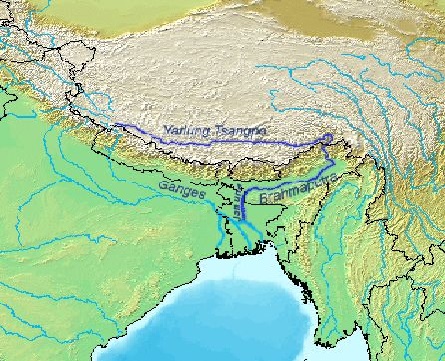
Bangladesh is set to initiate talks with India regarding its equitable share of water from transboundary rivers, announced Syeda Rizwana Hasan, an advisor to the Ministries of Environment, Forest, Climate Change, and Water Resources, on Wednesday.
'Public sentiment will be taken into account during these negotiations, and the results will be communicated to the public',she stated while addressing a seminar titled 'Bangladesh's Fair Share of Water in Shared Rivers' , held at Pani Bhaban in Dhaka to mark World Rivers Day.
She highlighted the complexities involved in sharing water from international rivers, stressing the importance of exchanging vital information, such as rainfall data and infrastructure locations. 'This exchange should be devoid of political influence, as it is essential for safeguarding lives and property' ,she emphasized.
Rizwana also pointed out that unilateral approaches to the International Court on these issues are not viable; cooperation between the two nations is essential.
'Sharing rainfall data is fundamentally a humanitarian concern that can save lives', she added, asserting that Bangladesh will clearly and firmly present its claims.
Additionally, she underscored the necessity of protecting the nation’s internal rivers, describing them as vital resources that require collective preservation.
The seminar was chaired by Mihir Biswas, convenor of the World Rivers Day Celebration Council, and moderated by Md Alamgir Kabir, General Secretary of BAPA.
The keynote was delivered by Md Ejaz, Director of the River and Delta Research Center, with contributions from Md Shahidul Islam, Professor of Geography and Environment at Dhaka University, and Shamsul Huda, Executive Director of the Association for Land Reform and Development.
The event drew participation from researchers, environmental advocates, and government officials from various universities, all discussing strategies for fair distribution of river waters and emphasizing the need for adherence to international law, accurate water data, and enhanced bilateral and multilateral discussions on river management.


