AI and the Dawn of an Abundant Future
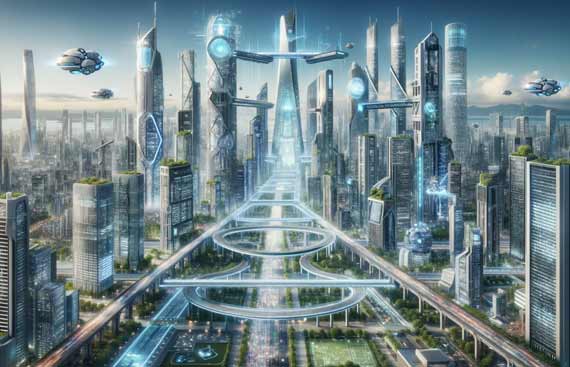
Artificial intelligence (AI) marks a transformative shift in technology, one that goes beyond simply extending human abilities. Unlike previous innovations that augmented physical power, AI amplifies intellectual capacity, opening the door to an era of unprecedented abundance.
AI’s potential lies in its ability to democratize access to expertise, revolutionizing fields such as education, healthcare and professional services. Imagine AI-powered tutors available to every student or virtual physicians providing personalized care around the clock. This technology could dismantle barriers to knowledge, health and opportunity, especially for the billions living in poverty, offering a solution to global inequalities.
AI also holds promise for addressing global challenges such as climate change and resource scarcity. It could optimize energy use, reduce emissions and contribute to the development of sustainable technologies. Additionally, AI could play a key role in governance, ensuring transparency and equity in decision-making. Rather than stifling creativity, AI can act as a partner, expanding human potential across art, science and innovation.
However, these benefits do not come without challenges. AI’s impact on employment could disrupt labor markets, exacerbating inequalities unless properly managed. Critics have raised concerns about job losses and economic instability, but these outcomes are not inevitable. With thoughtful policies such as universal basic income (UBI), income redistribution and strategic legislation, societies can manage these disruptions and ensure that AI’s benefits are shared by all.
Over the next two decades, AI is expected to perform a significant portion of tasks across various sectors, from medicine to manufacturing, often outperforming humans in efficiency and consistency. This does not signal the end of work, but a transformation. Humans will initially oversee AI ‘interns,’ enhancing productivity. Eventually, society will determine which roles to automate and which to retain, guided by evolving values and priorities. In an AI-enhanced world, creativity and innovation will be the main drivers of value, not routine tasks.
Another critical challenge in this new era will be AI’s deflationary effects. As AI reduces costs and increases accessibility, traditional economic measures like GDP may no longer fully capture rising living standards. New metrics will be necessary to assess societal well-being in an age of abundance. Furthermore, AI’s ability to lower costs and eliminate scarcity could shift society’s focus from economic growth to well-being, fostering a move from efficiency-driven capitalism to a more empathetic model.
The path forward requires careful consideration. Ethical concerns surrounding AI, such as bias, misuse and the concentration of power, necessitate investments in AI safety and governance. Policymakers must prioritize those most affected by disruption, learning from the mistakes of previous technological revolutions. As authoritarian regimes race to dominate AI, democratic societies must lead by example, embedding equity and inclusion into AI deployment.
The future of AI is not predetermined; it is a choice. With deliberate action, humanity can harness AI’s transformative power to create a world of abundance, equality and fulfillment. This is not merely a technological revolution—it is an opportunity to redefine the essence of humanity. In this vision, we will be free to pursue our passions, deepen relationships and expand our imaginations, liberated from the constraints of scarcity and labor. The future is in our hands.