

After the Chandrayaan-3 mission, ISRO has a packed launch calendar
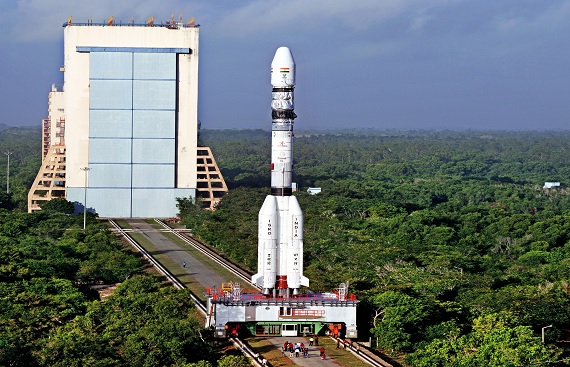
ISRO has a packed calendar ahead of it, including the launch of a mission to study the Sun, a climate monitoring satellite, a test vehicle for the Gaganyaan human space travel program, and an Indo-US synthetic aperture radar. The nation's first specialized polarimetry mission, XPoSat (X-ray Polarimeter Satellite), which will explore the behavior of bright astronomical X-ray sources under adverse conditions, is also prepared for launch, an ISRO official said. The first Indian observatory to study the Sun from space, Aditya-L1, is almost set to launch, most likely in the first week of September.
According to ISRO Chairman Somanath S, the space agency has also lined up the launch of a climate observation satellite INSAT-3DS. The launch of a test vehicle mission for the validation of the crew escape system for Gaganyaan, the country's maiden human space flight mission, is also expected soon. "(Then) we have to launch NISAR, the India-US built Synthetic Aperture Radar", Somanath said in his independence day address at ISRO headquarters here on August 15. "So, our hands are full." "We are going to build a large number of satellites for our security purpose as well in the coming days," Somanath had said. According to ISRO officials, NASA-ISRO SAR (NISAR) is a Low Earth Orbit (LEO) observatory being jointly developed by US space agency NASA and ISRO.
NISAR will map the entire globe in 12 days and provide spatially and temporally consistent data for understanding changes in Earth's ecosystems, ice mass, vegetation biomass, sea level rise, groundwater, and natural hazards, including earthquakes, tsunamis, volcanoes, and landslides. They said. "It carries L and S dual band Synthetic Aperture Radar (SAR), which operates with Sweep SAR technique to achieve large swath with high-resolution data. The SAR payloads mounted on Integrated Radar Instrument Structure (IRIS) and the spacecraft bus are together called an observatory", an ISRO official noted. Before undertaking the Gaganyaan human space (manned) flight mission, ISRO planned two unmanned missions.
"We are getting ready for the (first of the two) unmanned crew module mission by the beginning of next year", an ISRO official said. The objective of the Gaganyaan mission is to demonstrate the capability of conducting a human space flight mission to LEO on board an Indian Launch vehicle. The Orbital module consists of a Crew module and a Service module. The crew module, which is a pressurized module, acts as living quarters for the crew. The orbital module will be positioned in an approximately 400 km circular orbit around Earth for one to 3 days & the crew module will return at the designated location at sea.


