

Adani Group Unveils Historic $100 Billion Capex Plan for Nation-Building
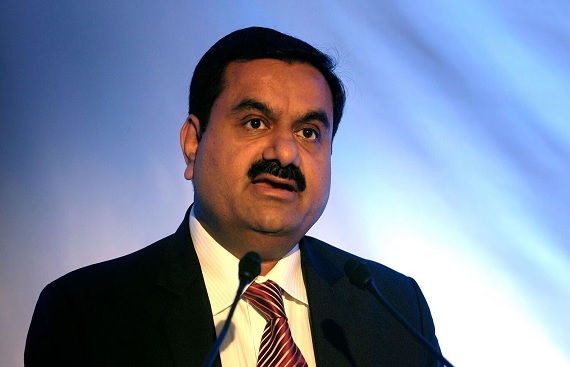
- Gautam Adani announced a massive five-year capital expenditure plan to boost India’s infrastructure, energy, and logistics sectors.
- The investment reflects Adani Group’s belief in India’s growth story, aiming to strengthen the country’s industrial and economic backbone.
- Citing the transformation of Mundra Port, Adani highlighted how past successes fuel the Group’s bold, future-focused expansion across renewable energy, transport, and core industries.
In a bold declaration that underscores the Adani Group’s unwavering confidence in India’s future, Chairman Gautam Adani announced a staggering capital expenditure of nearly $100 billion over the next five years. The announcement, made during the 5th Annual Conference of the Society for Minimally Invasive Spine Surgery-Asia Pacific (SMISS-AP) in Mumbai, marks one of the most ambitious investment plans in India’s private sector history.
Adani described the massive investment as a pivotal step in fortifying the foundational infrastructure necessary for India’s rise, symbolizing the aspirations of 1.4 billion citizens. “The scale and pace of this commitment is unprecedented in India’s private sector history as we do our part for strengthening the very spine of India’s rise that must carry 1.4 billion dreams”, he emphasized.
The investments, Adani noted, will focus on strengthening India’s core sectors, including energy grids, logistics corridors, and industrial infrastructure — which he referred to as “the very spine of India's growth.”
In his address, Adani recounted the Adani Group’s transformation journey, highlighting the success story of Mundra Port. What began as a modest salt-export jetty has evolved into India’s largest multi-cargo port. “Mundra is the manifestation of a belief made real… when vision dares, destiny bends”, he said.
He credited Gujarat’s forward-thinking public–private partnership policy in the mid-1990s as a catalyst for this transformation. After the initial US partner withdrew from the Mundra project, the Adani Group went ahead solo without prior construction experience. By 1998, the port became India’s first operational private port.
“Mundra gave us the courage to look beyond limits. It gave us the belief that barren salt lands could be converted into world-class infrastructure”, Adani noted. Following this, the Group rapidly capitalized on the government’s SEZ policy, transforming 40,000 acres of undeveloped land into a thriving industrial hub.
Today, that vision has grown into a national presence. Adani Group is now the world’s second-largest solar power company and is building the world’s largest single-site hybrid renewable energy park of 30 GW across 500 sq. km. The conglomerate is India’s largest private airport operator, handling over 25% of passenger traffic and 38% of air cargo. It also runs India’s most extensive ports and logistics network, responsible for 30% of the nation’s seaborne cargo.
In energy, the Group operates an integrated model that spans thermal and renewable power, transmission, distribution, natural gas, hydrogen, EV infrastructure, and battery storage. It is also the country’s second-largest cement manufacturer and has growing footprints in aerospace, defence, data centres, and real estate.
Gautam Adani concluded by affirming that these initiatives stem from deep-rooted belief in India's potential. “What started in our karmabhoomi has now become a pan-India network of dreams”, he said, signaling that the Group’s next phase of growth will be even 'bigger, faster, and bolder'.


