

India-Jordan Set to Double Trade to $5 Billion in 5 Years
- India and Jordan aim to double bilateral trade to USD 5 billion within five years.
- Leaders discuss cooperation in fertilisers, energy, digital tech, and culture.
- Several MOUs signed, including cultural exchanges and tourism collaborations.
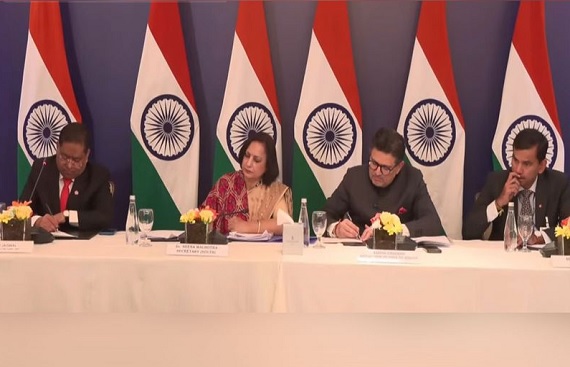
India and Jordan have agreed to strengthen economic and strategic ties, setting a target to double bilateral trade to USD 5 billion over the next five years. The announcement came ahead of Prime Minister Narendra Modi’s joint address with King Abdullah II at the India-Jordan Business Forum, attended by prominent business leaders from both nations.
MEA Secretary (South) Neena Malhotra, described Modi’s visit as historically significant, noting it is the first full-fledged bilateral visit in 37 years and coincides with the 75th anniversary of India-Jordan diplomatic relations. Discussions highlighted strong alignment on security concerns, with Jordan affirming support for India’s fight against terrorism and Modi commending the King’s efforts in de-radicalization.
Economic cooperation was a key focus, particularly in fertilisers and phosphates, alongside broader areas like energy, digital technology, and water management. Both countries also finalized agreements to enhance people-to-people connections and cultural exchanges. A notable initiative includes a Twinship Agreement linking Jordan’s Petra with Maharashtra’s Ellora Caves to boost tourism and cultural collaboration.
Also Read: Cognizant Launches Advanced Cyber Defense Center in Bengaluru
The leaders emphasized the importance of regional peace and stability, while digital cooperation was strengthened through a letter of intent for sharing successful digital solutions. Later in the day, PM Modi is scheduled to visit the Jordan Museum with Crown Prince Hussein bin Abdullah al-Hashimi.
The visit signals a deeper partnership between India and Jordan, focusing on trade growth, cultural ties, technological collaboration, and shared regional priorities.


