Jay Kotak Warns Rs 50k Bank Rule Could Shut Out 94% of Indians
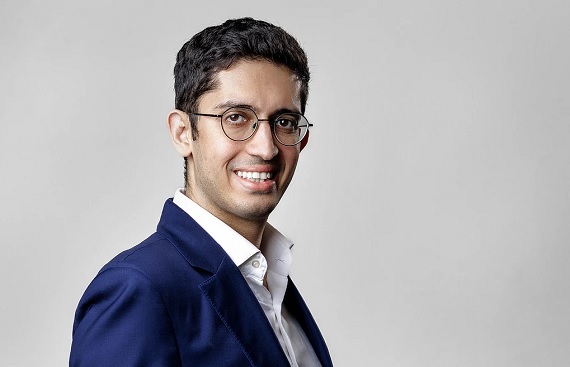
- Jay Kotak slams ICICI Bank’s move to raise minimum average balance for new savings accounts from Rs 10,000 to Rs 50,000, citing income realities of most Indians.
- Highlights tension between premium banking strategies and financial inclusion, urging digital-first, low-cost models.
- RBI says MAB is banks’ decision; financial inclusion index at 67 in 2025, with 89% adults having bank accounts and 55.98 crore Jan Dhan beneficiaries.
Jay Kotak, Co-head of Kotak811 and son of veteran banker Uday Kotak, has criticised ICICI Bank’s recent decision to raise the minimum average balance (MAB) for new savings accounts from Rs 10,000 to Rs 50,000.
Taking to X (formerly Twitter), Kotak wrote, “Every Indian must access our financial sector. 90% of India makes less than Rs 25,000 a month. A Rs 50,000 minimum balance implies a sum equal to around 94% of Indians’ monthly income is to be left with the bank at all times, else a fee!”
His remarks have ignited a wider debate on the balance between premium banking strategies and the realities of India’s income distribution. Kotak, known for advocating tech-driven banking through Kotak811, emphasised the need for low-cost, digital-first approaches. “Implication: physical cost to serve may be high. Digital first is the way. If banks don’t do it, fintechs will. Banking should be for all Indians”, he added.
Responding to queries on the issue, Reserve Bank of India Governor Sanjay Malhotra clarified that decisions on minimum balance requirements lie solely with banks, as they are not under RBI’s regulatory purview. A senior banker said the higher limit 'appears to be a time correction' given that older thresholds were set many years ago.
ICICI Bank’s move is being viewed as a push towards attracting mass-affluent customers rather than ending mass banking access altogether. India’s Financial Inclusion Index has climbed to 67 in 2025, marking a 24.3% rise over recent years, highlighting ongoing progress. According to the World Bank’s Global Findex 2025, 89% of Indian adults now have bank accounts.
Furthermore, zero-balance accounts remain widely available, especially under government schemes. As of August 4, the Pradhan Mantri Jan Dhan Yojana has brought 55.98 crore beneficiaries into the banking fold.
While ICICI Bank’s decision reflects a segment-focused strategy, Kotak’s criticism underscores an enduring debate in the financial sector how to balance operational costs with broad-based financial inclusion in a country where a vast majority still earns below the middle-income threshold.
The development could prompt further discussion among policymakers, banks, and fintech players on how India’s growing banking sector can serve both affluent customers and those at the lower end of the income spectrum without compromising accessibility.