
July - 2005 - issue > On The Cover
Sanjiv Sidhu Will he hit the billion-dollar mark again?
Pradeep Shankar
Thursday, June 30, 2005

The changing market dynamics is compelling global companies like Dell to source products from across the globe. Also, timely introduction of new products is equally important, which means the entire supply chain is changed rapidly and the need for solutions to manage such change in a quick and efficient manner is increasing.
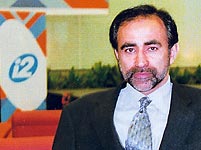
Sanjiv Sidhu, chairman and founder of i2 technologies—a man widely credited as being one of the first to recognize the opportunity in the supply chain—is gearing up to take advantage of new business environment. In the hey days of the Internet era, i2’s revenue soared to $1.1 billion—only to fall quickly, the dot-com bust, financial shortfalls, and much-publicized conflicts with customers such as Nike only added to the company’s woes. Yet i2 survived.
Sidhu says the company is back on track following new customer wins, as well as increases in i2’s net income and operating revenue. He is hoping to cash in on the outsourcing phenomena. “Customers are looking at ways of handling the supply chain in an outsourcing world where there has been an explosion of product variety, complexity and variability. It plays to i2’s strengths,” he says.
At the company’s headquarters in Dallas and R&D center in Bangalore, India a team of engineers—i2ers as they are called, are developing the framework of what is called the next generation supply chain; promising quantum leap in productivity. One primary trait of next-generation SCM is demand-supply synchronization, characterized by real-time demand management integration.
The demand-driven supply chain and supply-driven demand will distinguish the next generation from their predecessors. The next generation extends supply chain management, encompassing the customer’s customer, and the supplier’s supplier—delivering visibility across the extended value chain.
Can i2 get back to $1 billion mark? “We have 800-900 customers and revenue is $300-$400 million at the moment. If we could get $0.5 million from each customer on average, we can double that and become a $1 billion company. This is a significant opportunity that could be achieved without getting any new customers.
Nokia, Dell, Texas Instruments and Infineon Technologies are all existing customers who have committed multi-year, multi-million dollar contracts. The opportunity to be a $1 billion plus company exists and we are executing on it now,” he says.
Partnerships
Getting there isn’t easy as it appears. “The focus really has to be to execute those things that generate value for our customers and the outcome of that will be revenue,” says Sidhu.
He acknowledges that i2 lacks coverage. “There are several sectors, where our story is not being told,” he says candidly.
Over the last two years, i2 has restructured itself with an increasing thrust on building partnerships. While i2 directly focuses on strategic, large account customers, it adopts indirect strategy through partnerships to reach out to a larger customer base across verticals and geographies. “Going forward our focus would be more on partners, particularly in the developing countries. We need a lot of breadth and coverage that we will not be able to provide directly.
The breadth would be achieved by partners while the depth would be direct,” says Sidhu.
The People Factor
Sidhu’s constant endeavor has been to charge up the sales team and bring together teams that bring capability not just in sales but also in delivery and customer care. It is quite a challenge to make the three teams work in a melodic rhythm. “It needs excessive resources. A lot of it is in the people. It is important that people in the company do not draw strong walls within the organization. T
They need to communicate much better,” he adds.
While the sales force is aggressive, the technical team is progressive. Sidhu, despite his outwardly calm demeanor, has a reputation for rallying his troops and aggressively recruiting top-notch technical talent. Sidhu and his elite tech force are about to be put to the ultimate test—making the second-generation supply chain framework work.
Competition
There is activity picking up in the supply chain market. Enterprise Resource Planning vendors like SAP are threatening the pure-play vendors’ territory. But the market still lacks a clear leader. Can i2 grab that position again? Sidhu believes he can. SAP, with its bigger sales, marketing and press departments, is a challenge for i2. Sidhu doesn’t support the argument that SAP can offer a single one-stop shop for all enterprise applications. “That whole argument is flawed. Less than 50 percent of the [supply chain management-related] data we need comes from enterprise resource planning systems anyway.
We are the broadest suite provider for transportation, product outsourcing, factory planning and demand planning. When you put it all together, our suite is broader than anyone else’s. I don’t support the argument of one-stop shop, and if I do, i2 is more justified to be called a one-stop shop for the supply chain,” he argues.
Customer Focus
Sidhu’s articulation to generate value to customers in dollar in the initial days took i2 to greater heights. “During the days of craze in Internet era, we lost some of that value-focus,” he admits. The steam is back again. Sidhu has introduced several new programs to generate more value-add customers.
To regain lost ground, i2 is also focusing on providing services to their supply chain management software customers. “In the new age, what matters more is what your customer sold to their end customer rather than what you sold to your customer. So we are helping our customers to capture their customers’ data, analyze it and bring business intelligence into the supply chain faster,” says Sidhu.
From selling inventory optimization software, i2 is also aggressively promoting inventory optimization as a service. The inventory optimization services are provided from its India offices. i2ers in India run the software for the customer and provide information on a regular basis to make shifts in inventory profile based on changing demand patterns, changing capacity patterns and better analytics. “This model is fairly successful.
Texas Instruments is one of the largest users of this service,” says Sidhu. On similar lines, i2 is also considering providing factory planner service in place of the software.
In November 2004, when AMR Research named top 25 supply chain leaders it was a heartening moment for Sidhu, since 19 of the 25 are i2 customers.
Early Days
Sidhu has been on a mission since 1988, when he quit Texas Instruments Inc. to found i2.
At TI, Sidhu toiled to write software that managed the supply chain for chip manufacturing and he saw an opportunity to create less expensive programs that could be used more widely. He hunkered down and began writing code in his two-bedroom apartment.
He founded i2 with friend and business partner the late Ken Sharma (both Indians, which caused Sidhu to joke that i2 stood for “two Indians”).
The 45-year-old Sidhu made a fortune developing software that helps companies like Coca-Cola, Best Buy, Dell Computer, General Motors, and Home Depot plan and track inventory levels, shipments from suppliers, make better and faster production decisions.
In the crowded and fragmented supply-chain management software market, i2 had an impressive run. Since inception the company has gained more than a 30 percent market share. With i2’s immensely popular IPO in 1996, Sidhu’s personal wealth increased tenfold, to more than $7 billion making him the second-richest person in Texas and ranked forty-eighth on Forbes list of the world’s richest people.
The $9.3 billion mega-merger with Aspect Development, a supply chain services company followed in 2000, further pushing i2’s stocks to the roof. And then the bust happened. And with it i2’s bright star began to fall. The situation came to a head when the SEC launched an investigation, provoked by claims of wrong financial reporting by former employees.
A spate of resignations followed after i2’s de-listing from Nasdaq. After beating the drum for SCM loudest and longest, analysts reckon Sidhu may have missed a few tricks during the height of the tech bubble.
Sidhu is preparing to perform his trick again. He is more excited than before. He is now focusing on the fundamentals and is readying for a come back. i2 is reinventing itself in view of the dramatically changed environment.